
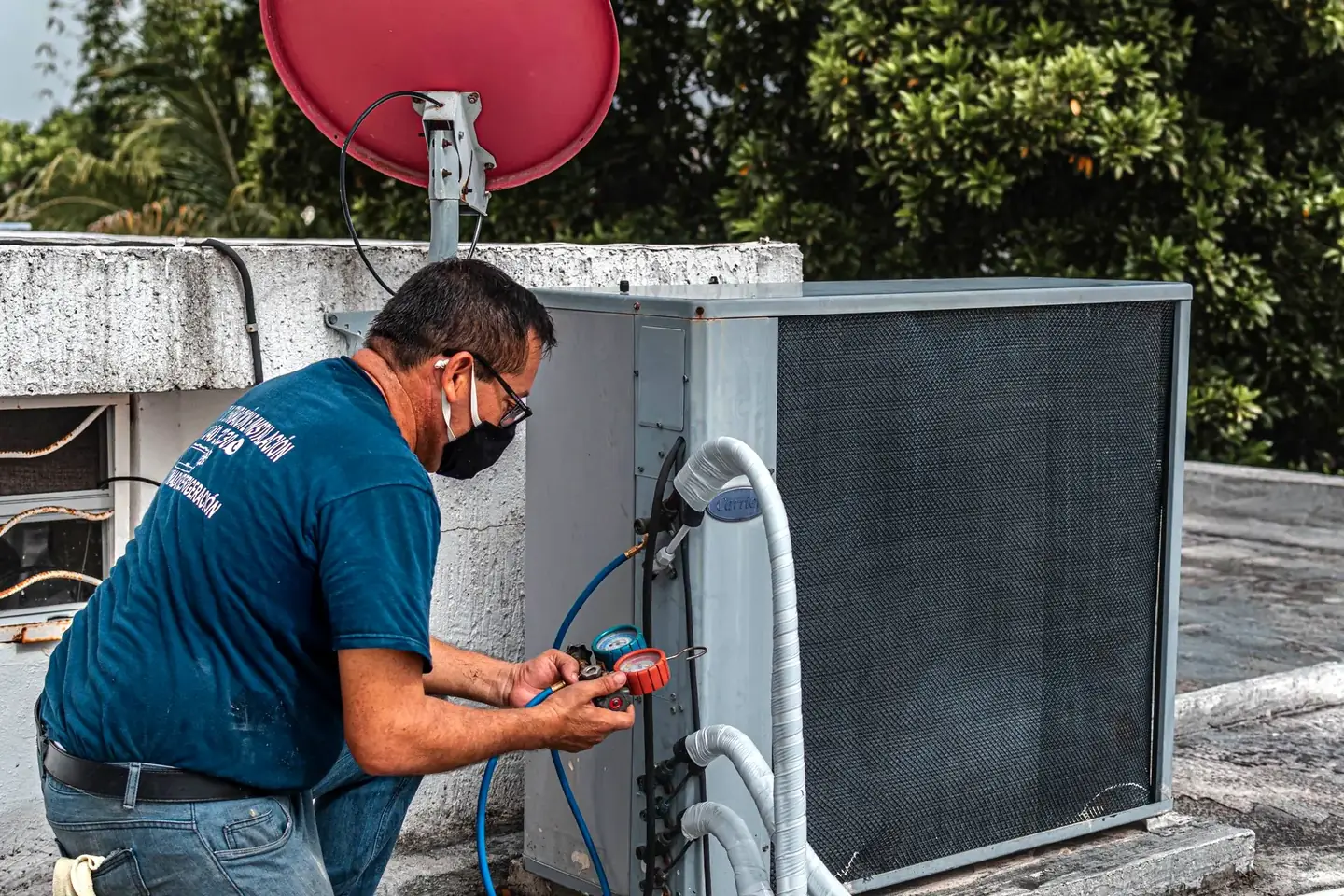
Ductwork Repair, Sealing & Design in Rockwall, TX
The best system in the world cannot deliver air through ductwork that leaks it into your attic.
Heating & Air
Ductwork Repair, Sealing & Design
Ductwork is the part of a heating and cooling system nobody sees and almost nobody inspects. It is also where a substantial amount of conditioned air is lost in a typical home — through disconnected joints, torn flex duct, unsealed plenums and boots that were never properly attached.
The consequences are the complaints homeowners live with for years and blame on the equipment: one room that never cools, an upstairs that will not match downstairs, bills higher than they should be, and dust that returns immediately after cleaning.
In North Texas the stakes are higher than average, because most of our ductwork runs through attics that reach extreme temperatures in summer. Air leaking out of a duct up there is money leaving the house, and air leaking in is superheated attic air being delivered to your bedroom.
When you need ductwork
The symptoms homeowners actually describe when they call us — and what each one usually means.
One room is always wrong
A single room that will not match the rest of the house is usually a duct problem — a crushed or disconnected flex run, an undersized branch, or a boot that came loose from the register.
Upstairs and downstairs never agree
Partly physics, partly duct design. Two-story homes here frequently have inadequate return air upstairs, which no thermostat setting can compensate for.
Bills higher than the equipment justifies
If a relatively new, correctly charged system is producing high bills, the delivery system is a prime suspect. Conditioned air lost into an attic is paid for and never used.
Weak airflow at every register
Not a single room but the whole house. Undersized returns, an obstructed main trunk, or ducts too restrictive for the equipment.
Dust that comes straight back
Leaks on the return side pull attic air — insulation fibers, dust, whatever is up there — directly into the airstream and distribute it through the house.
A whistling or roaring sound from the vents
High velocity through undersized or restricted ducts. It is telling you the system is fighting the delivery path.
What actually happens on the job
No mystery, no vague diagnosis. Here is the sequence we follow every time.
Inspect the whole run
Attic, crawl space, plenums, trunks, branches and boots. We look at connections, support, insulation condition and physical damage — crushed flex duct sitting on a joist or kinked around a corner is remarkably common.
Measure static pressure
This is the diagnostic that turns opinion into fact. High static pressure means the system is working against the duct design, and it tells us whether the problem is restriction, sizing, or leakage.
Seal properly, not with tape
Mastic and mesh at joints and connections. Standard duct tape fails in an attic within a few years — the adhesive gives up in the heat and you are back where you started.
Correct the design where sealing is not enough
Adding return air, resizing a branch, replacing collapsed flex with properly supported runs, or adding a dedicated run to a problem room. Sealing a badly designed system only gets you part of the way.
Attics here are brutal, and that is where your ducts live
Almost all residential ductwork in this area runs through the attic, and a North Texas attic in August reaches temperatures far above the outdoor air. Every foot of duct up there is a heat exchanger working against you. A leak on the supply side means you are cooling the attic. A leak on the return side means you are pulling superheated, dusty attic air into the system and delivering it to your family. Duct insulation degrading over decades makes it worse, and older flex duct becomes brittle in that environment and separates at connections. This is why duct sealing produces a bigger comfort and cost improvement in this region than the same work would in a climate with basements or conditioned crawl spaces — and why it is worth checking before spending money on higher-efficiency equipment that will be feeding the same leaky system.
Straight talk on pricing
Duct work is priced by scope. Sealing an accessible system is a defined job. Replacing collapsed runs, adding returns or redesigning a section costs more, and attic accessibility is a significant factor — a low-clearance attic in July is genuinely difficult work. What we will do is inspect and measure first, then tell you which specific fixes will actually change how the house feels, rather than quoting a whole-system replacement by default.
(469) 338-5533Ductwork questions we get asked
How much air can leaky ducts actually lose?
Enough to matter substantially. In homes with older or poorly sealed duct systems, a meaningful fraction of the conditioned air never reaches a register — and because our ducts run through blistering attics, the losses come with a temperature penalty on top. We would rather measure your specific system than quote you a national average, and static pressure testing plus a visual inspection tells us what is actually happening in your house.
Is duct cleaning the same as duct sealing?
No, and they solve different problems. Cleaning removes accumulated dust and debris from inside the ducts. Sealing closes the leaks that let air escape and let attic air in. If dust keeps returning quickly after a cleaning, that is a strong sign you have return-side leaks — in which case sealing addresses the cause and cleaning addresses the symptom.
Can duct problems be fixed without replacing everything?
Usually, yes. Most systems need targeted work: sealing the connections, replacing a few damaged runs, and often adding return air where it is short. Full replacement is occasionally warranted — badly deteriorated flex duct throughout, or a design so undersized that patching it cannot help — but it should be the conclusion of an inspection rather than the opening offer.
Why is my upstairs always hotter than downstairs?
Heat rises, so some difference is unavoidable. But a pronounced gap is usually fixable, and it is generally a distribution problem rather than a capacity one: insufficient return air upstairs, supply runs that are too long or too restrictive to serve the far bedrooms, and duct leakage in a hot attic all compound. Adding return capacity upstairs is frequently the single highest-impact fix, and it is a considerably smaller job than replacing equipment.
What Rockwall neighbors say
"Fastest to respond and complete the job — a must when you wake up to no hot water on a cold morning. They cleaned my tankless water heater and had everything running perfectly."
"A great partner for both plumbing and HVAC. High-integrity company — responsive with questions, they show up on time, and their prices are reasonable. Exactly what you want."
"Fantastic. Great job for a fair price, responsive and professional the whole way through. Highly recommend Wilson Family for any plumbing work."
"Fair estimate and they went beyond to sort out the city requirements for us. Kari was incredibly responsive and Tyrone was professional and right on schedule."
Ductwork across Rockwall County & the Dallas metro
Same licensed team, same 24/7 phone, every one of these communities.
Related services
Worth reading first
Everything we do
Book Wilson Family — one call fixes plumbing, heating & air.
Upfront pricing, licensed technicians, and a family that treats your home like its own. We answer 24/7.