
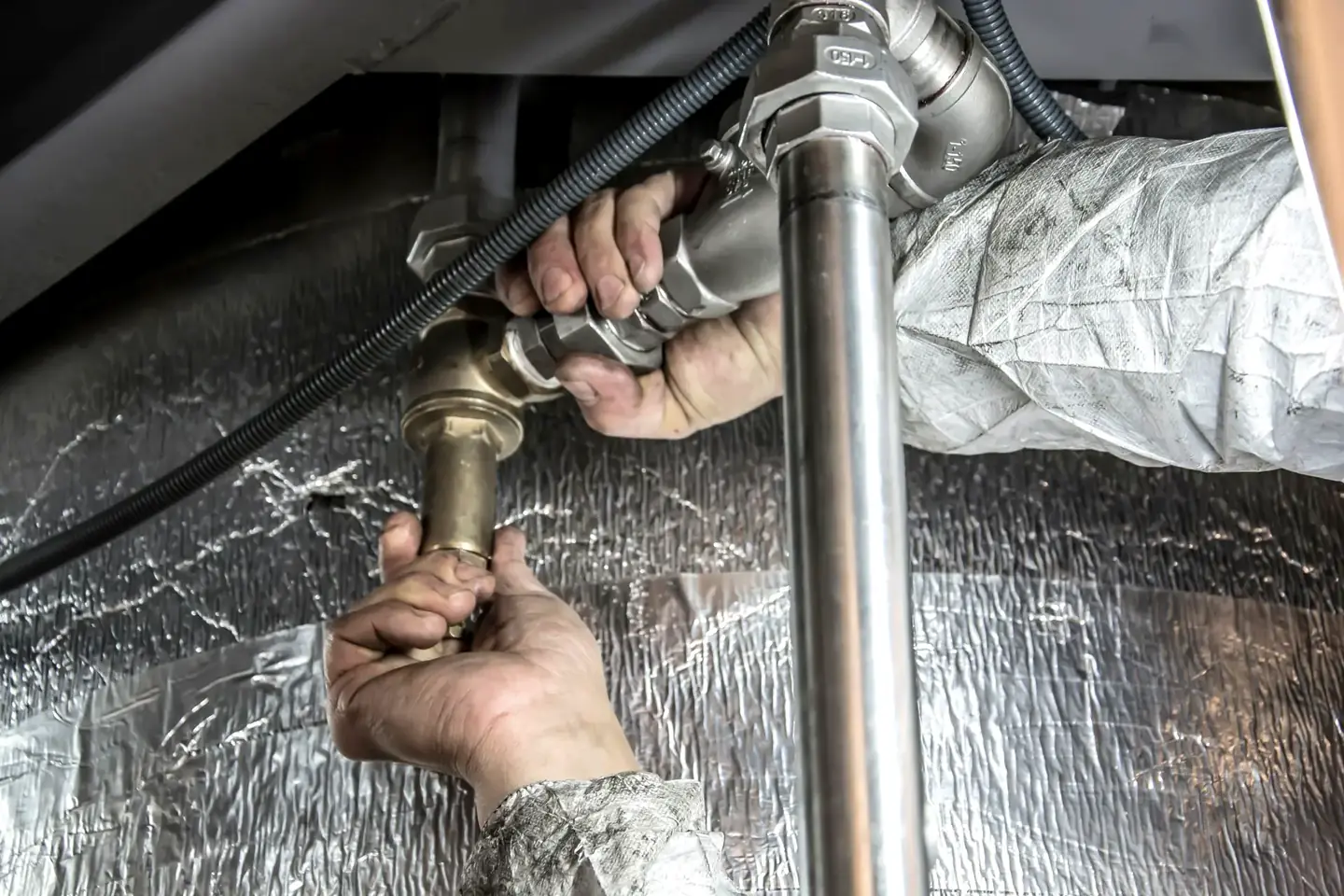
Gas Line Repair & Installation in Rockwall, TX
If you smell gas, leave the house first and call from outside. Then we handle the rest.
Emergency? We don't keep you waiting.
Burst pipes, gas leaks, no hot water — we answer 24/7, every day of the year.
Plumbing
Gas Line Repair & Installation
Gas work is the part of plumbing where there is no acceptable margin for error. A leak is not an inconvenience — it is a fire and asphyxiation hazard, and improperly installed or vented gas appliances are a carbon monoxide risk. This is licensed, permitted, pressure-tested work every single time.
If you smell gas right now: do not touch light switches, do not use your phone inside, do not start a car in an attached garage. Get everyone out of the house, and once you are outside call your gas utility and then call us at (469) 338-5533.
For planned work — a new gas range, an outdoor kitchen, a fire pit, a pool heater, a standby generator — we size the line for the load, run it correctly, pressure test it, and pull the permit.
When you need gas lines
The symptoms homeowners actually describe when they call us — and what each one usually means.
The smell of rotten eggs or sulfur
Natural gas is odorless; the sulfur smell is an additive specifically so you can detect it. Any persistent gas smell is an evacuate-first situation. Never try to locate the source yourself.
Hissing near a line, meter or appliance
An audible hiss means volume. Leave, and call from outside.
Dead or dying vegetation in a line over a buried run
A stripe of dead grass along a straight line, in an otherwise healthy yard, can indicate an underground gas leak displacing oxygen from the soil.
A gas bill that climbed with no change in usage
Small leaks do not always smell strongly enough to notice, particularly outdoors or in a well-ventilated garage. An unexplained bill increase is worth a pressure test.
Yellow or orange burner flames instead of blue
A gas flame should burn crisp blue. Yellow, orange or lazy flames mean incomplete combustion — which produces carbon monoxide. This applies to your range, your water heater and your furnace.
Headaches, nausea or drowsiness that improve when you leave
That pattern is the classic carbon monoxide presentation. Get out and get fresh air, then call. Every home with gas appliances should have working CO detectors.
What actually happens on the job
No mystery, no vague diagnosis. Here is the sequence we follow every time.
Make it safe first
On any suspected leak, the priority order is people out, gas off at the meter, then diagnosis. Nothing else happens until that sequence is done.
Pressure test to find it properly
We isolate sections and pressure test rather than sniffing around. That locates the leak accurately and, just as importantly, proves the rest of the system is sound.
Repair or replace to code
Correct materials, correct fittings, sediment traps and shutoffs where required. Gas is not a place to improvise.
Test again, then permit and inspect
Every gas job gets a final pressure test before it is called finished, and we pull the permit and coordinate the inspection where the city requires it. That paperwork protects you at resale and it protects you now.
Older lines, added loads, and outdoor living
Two patterns drive most of our gas work locally. The first is age — homes in the older parts of Garland, Rowlett and central Rockwall may still have original black iron that has corroded at the threads, particularly where a run passes through a damp crawl space or exits a wall. The second is added load. Homeowners across the metro have been adding outdoor kitchens, fire features, pool heaters, generators and tankless water heaters, and every one of those draws BTU the original line was never sized to deliver. A system that worked fine for a range and a furnace can starve when a tankless unit fires. Sizing has to be recalculated for the whole house, not just the new appliance — that step gets skipped often, and the symptom is equipment that underperforms for reasons nobody can explain.
Straight talk on pricing
Leak repair depends on where the leak is and whether the surrounding line is sound — a threaded joint in an accessible location is a small job, a corroded buried run is not. New line installation is priced by distance, routing difficulty, and whether the existing supply and meter can carry the added load. Permit fees vary by city. We quote the whole thing, permit included, before starting.
(469) 338-5533Gas Lines questions we get asked
What do I do right now if I smell gas?
Get everyone out of the house immediately. Do not flip light switches on or off, do not unplug anything, do not use a phone inside, and do not start a vehicle in an attached garage — any of those can create a spark. Leave doors open on your way out if you can do it without delay. From outside and well away, call your gas utility’s emergency line, then call us at (469) 338-5533. Do not go back in until it has been cleared.
Do I need a permit for a new gas line?
In the cities we work across, generally yes, and you want it. A permitted, inspected gas installation is documented and verified. An unpermitted one is a problem that surfaces at resale, may complicate an insurance claim, and — most importantly — has never been independently checked. We handle permits as part of the job.
Can you run a line for an outdoor grill or fire pit?
Yes, and it is one of the more common requests we get. The considerations are load sizing against the rest of the house, routing, correct materials for a buried or exterior run, and a properly placed shutoff. Done right, it is a permanent upgrade you never think about again.
Why does my gas range burn with a yellow flame?
A properly adjusted natural gas flame is blue. Yellow or orange indicates incomplete combustion, which can come from a dirty burner, poor air-to-gas mixture, or inadequate combustion air. Incomplete combustion produces carbon monoxide, so it is worth addressing rather than living with. The same signal on a water heater or furnace burner is more serious still — those are vented appliances, and a venting problem plus incomplete combustion is exactly the dangerous combination.
What Rockwall neighbors say
"Fastest to respond and complete the job — a must when you wake up to no hot water on a cold morning. They cleaned my tankless water heater and had everything running perfectly."
"A great partner for both plumbing and HVAC. High-integrity company — responsive with questions, they show up on time, and their prices are reasonable. Exactly what you want."
"Fantastic. Great job for a fair price, responsive and professional the whole way through. Highly recommend Wilson Family for any plumbing work."
"Fair estimate and they went beyond to sort out the city requirements for us. Kari was incredibly responsive and Tyrone was professional and right on schedule."
Gas Lines across Rockwall County & the Dallas metro
Same licensed team, same 24/7 phone, every one of these communities.
Related services
Worth reading first
Everything we do
Book Wilson Family — one call fixes plumbing, heating & air.
Upfront pricing, licensed technicians, and a family that treats your home like its own. We answer 24/7.