
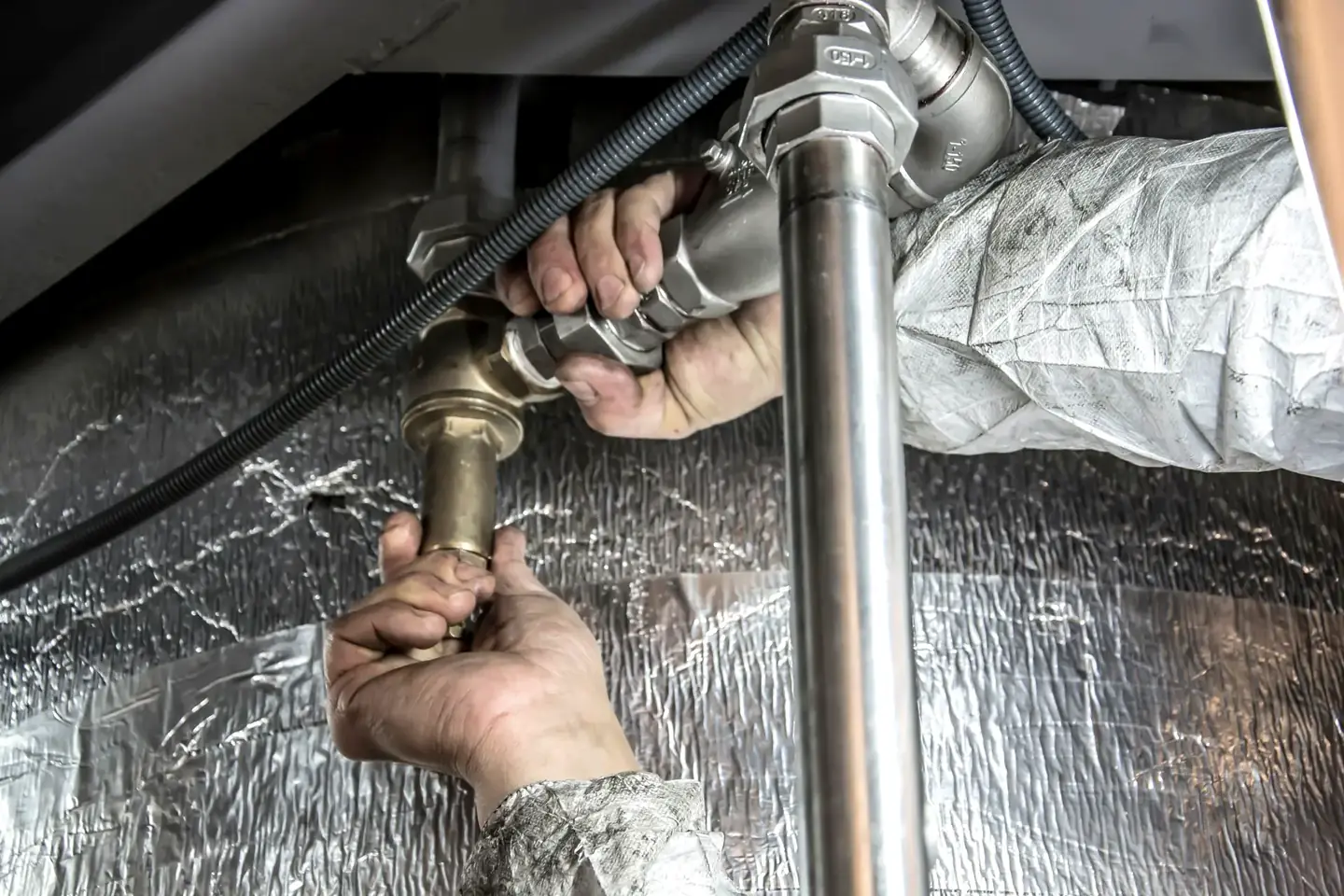
Water Pressure & Pressure Regulator Repair in Rockwall, TX
Too little pressure is annoying. Too much quietly destroys everything downstream of it.
Plumbing
Water Pressure & Pressure Regulator Repair
Water pressure problems get treated as a comfort complaint. Low pressure certainly is one. High pressure is a different thing entirely — it is a slow-motion attack on every fixture, appliance, supply line and joint in the house, and most homeowners have no idea their pressure is out of range.
The component in the middle of this is the pressure reducing valve, or PRV, usually installed where the supply enters the house. Municipal pressure can arrive well above what residential plumbing is designed for, and the PRV’s job is to bring it down to a safe working range. PRVs wear out. When one fails, it either strangles the house or stops regulating altogether.
Diagnosing it takes a gauge and about ten minutes. Replacing fixtures and hoses that keep failing because nobody checked the pressure takes years and considerably more money.
When you need water pressure
The symptoms homeowners actually describe when they call us — and what each one usually means.
Banging pipes when a faucet shuts off
Water hammer. Some of it is a missing or waterlogged arrestor, but pronounced hammering across the house frequently points to pressure running higher than it should.
Toilet fill valves and faucet cartridges failing repeatedly
These parts have a pressure rating. Run them above it and they wear out on a schedule. If you are replacing fill valves more than once every few years, check the pressure before buying another one.
Weak flow everywhere at once
One weak fixture is an aerator or a cartridge. Every fixture weak simultaneously is the supply, the main shutoff, the PRV, or corroded pipe narrowing throughout.
Pressure that swings through the day
Strong in the morning, weak in the evening, or the reverse. A failing PRV loses the ability to hold a set point as municipal pressure fluctuates.
The T&P valve on the water heater keeps discharging
Frequently blamed on the water heater. It is often thermal expansion in a closed system with no expansion tank, or excess incoming pressure — neither of which is the heater’s fault.
Dripping and running with no obvious cause
Fixtures that will not seal properly under sustained high pressure. Chasing them individually never fixes it.
What actually happens on the job
No mystery, no vague diagnosis. Here is the sequence we follow every time.
Measure static and dynamic pressure
A gauge on an exterior hose bib gives static pressure. We also check it under flow, and at more than one point if the readings do not agree. This step is quick and it decides everything that follows.
Test the PRV rather than assume
A regulator can fail high, fail low, or fail to hold. Each behaves differently and each has a different implication for the rest of the system. Some PRVs can be adjusted back into range; many that have failed need replacing.
Check the whole picture
Low pressure is not always the PRV. A partially closed main valve, a corroded supply line, a clogged whole-house filter, or narrowing galvanized pipe all present the same way. We rule those in or out rather than replacing a part and hoping.
Correct it and check expansion
If the system is closed — and adding a PRV or a check valve closes it — thermal expansion needs somewhere to go. That means a properly sized and correctly charged expansion tank. Skipping it is how a new PRV turns into a discharging T&P valve.
Municipal pressure across the metro is not gentle
A lot of the newer construction around Rockwall County and the northern suburbs sits on distribution systems that deliver plenty of pressure — and homes downhill from a tower or on a strong main can see static pressure well above what residential fixtures are rated for. Combine that with our hard water, which shortens the life of every valve seat and cartridge it touches, and pressure-driven fixture failure becomes routine. A pressure gauge is an inexpensive thing to own here. If you have never put one on your hose bib, it is worth doing this weekend; it takes a minute and it is the single most informative plumbing test a homeowner can run.
Straight talk on pricing
Testing pressure is quick and cheap, and frequently it is the whole job — a PRV that can be adjusted back into range costs very little to correct. Replacement cost depends on where the valve sits and how accessible it is; some are at an easy exterior location and some are buried in a box that has to be dug out. If the diagnosis turns out to be corroded supply pipe rather than a valve, that is a repiping conversation and we will be straight with you about it.
(469) 338-5533Water Pressure questions we get asked
What water pressure should a house have?
Residential plumbing is generally designed around a working range in the 40 to 60 psi neighborhood, and most codes cap what is permitted at the fixture. Consistently running well above that shortens the life of everything in the system. Below it and you get the weak-shower complaint. A gauge on a hose bib tells you where you sit in about a minute.
Can I adjust the pressure regulator myself?
There is usually an adjustment screw, and it is tempting. Two cautions: a PRV that has actually failed will not hold a new setting no matter how you turn it, and adjusting pressure upward on an old system can expose weak joints you did not know about. If the regulator is old enough that nobody remembers it being replaced, testing it properly is the better first move.
Why does only my shower have low pressure?
A single weak fixture is almost never a whole-house pressure problem. It is usually a clogged aerator or showerhead, a partially closed angle stop under the fixture, a failing cartridge, or scale in the fixture itself — all cheap to fix. Our hard water clogs aerators and showerheads faster than most people expect; soaking one in vinegar solves a surprising number of these calls.
What is an expansion tank and do I need one?
When water heats it expands, and it needs somewhere to go. In an open system it pushes back into the municipal supply. Once a PRV or a check valve makes the system closed, that path is gone and the pressure spike hits your water heater and fixtures instead. An expansion tank absorbs it. If your system is closed and you do not have one — or you have one that has lost its charge — that is worth correcting.
What Rockwall neighbors say
"Fastest to respond and complete the job — a must when you wake up to no hot water on a cold morning. They cleaned my tankless water heater and had everything running perfectly."
"A great partner for both plumbing and HVAC. High-integrity company — responsive with questions, they show up on time, and their prices are reasonable. Exactly what you want."
"Fantastic. Great job for a fair price, responsive and professional the whole way through. Highly recommend Wilson Family for any plumbing work."
"Fair estimate and they went beyond to sort out the city requirements for us. Kari was incredibly responsive and Tyrone was professional and right on schedule."
Water Pressure across Rockwall County & the Dallas metro
Same licensed team, same 24/7 phone, every one of these communities.
Related services
Worth reading first
Everything we do
Book Wilson Family — one call fixes plumbing, heating & air.
Upfront pricing, licensed technicians, and a family that treats your home like its own. We answer 24/7.