
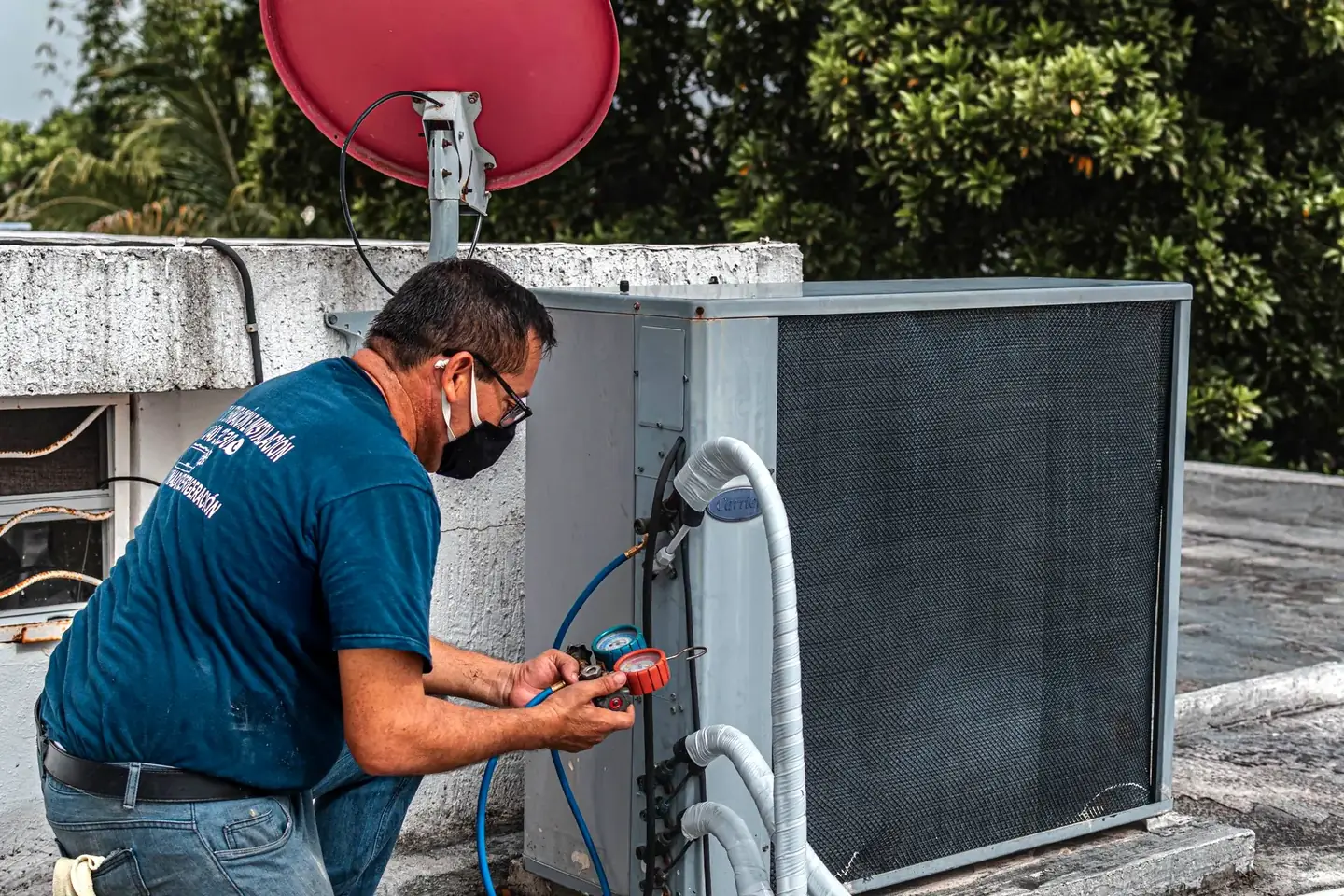
HVAC Maintenance & Seasonal Tune-Ups in Rockwall, TX
The point is not the checklist. The point is finding the failing capacitor in April instead of July.
Heating & Air
HVAC Maintenance & Seasonal Tune-Ups
Maintenance has a credibility problem in this trade, and it is earned — plenty of "tune-ups" are a filter change and a sticker. A real one is a measurement exercise: performance numbers taken, compared against specification, and used to find components that are degrading before they fail.
In our climate that has genuine value, because equipment here runs an enormous number of cooling hours and then sits idle for months. Both conditions cause problems, and both are catchable.
There is also a warranty angle worth knowing. Most manufacturers require documented annual maintenance to keep parts coverage valid, and denied claims on that basis are more common than people realize.
When you need HVAC maintenance
The symptoms homeowners actually describe when they call us — and what each one usually means.
It has been more than a year
Spring for cooling, fall for heating. If neither has happened in the last twelve months, that is the whole answer.
Bills have been drifting up
A gradual climb with the same habits usually means degrading efficiency — dirty coils, drifting charge, restricted airflow. All are correctable and all get worse.
Rooms have started feeling uneven
Distribution problems that were marginal become noticeable as airflow degrades. Worth measuring rather than living with.
The system is running longer than it used to
Longer run times for the same result is the earliest measurable sign of a system losing capacity.
You have a manufacturer warranty you want to keep
Read the terms. Most require documented annual service, and a denied compressor claim is an expensive way to learn that.
The equipment is getting older
Maintenance matters most on equipment past the halfway point of its life, where catching a small problem prevents a large one.
What actually happens on the job
No mystery, no vague diagnosis. Here is the sequence we follow every time.
Measure the performance numbers
Temperature split, static pressure, refrigerant pressures with superheat and subcooling, and amp draw on every motor. These get recorded so next year we can see what has changed — a trend is more useful than a single reading.
Clean what actually affects performance
Condenser coil, evaporator coil where accessible, blower wheel, condensate drain and pan. A blower wheel loaded with dust moves noticeably less air and nobody ever looks at it.
Test the components that fail
Capacitors get measured against rated microfarads rather than eyeballed. Contactors get inspected for pitting. Motor bearings, belts, relays and safety switches all get checked. This is where the value is: a capacitor reading below spec in April is a five-minute swap instead of a no-cool call in July.
Full safety check on the heating side
Heat exchanger inspection, combustion characteristics, draft and venting verification, gas pressure, and flame sensor cleaning. On heating equipment, safety is not a line item — it is the reason for the visit.
Two seasons, two completely different failure modes
Cooling equipment here accumulates run hours at a rate that would astonish someone in a milder climate — near-continuous operation across a long summer. Capacitors, contactors and fan motors are consumables under that load, and they fail during the heat, when demand is highest and everyone is booked. Heating equipment has the opposite problem: eight or nine months idle, during which dust settles on flame sensors, rodents find their way into cabinets, and small faults develop unnoticed. Then the first hard freeze arrives, every furnace in the metro fires simultaneously, and the marginal ones fail on the same night. Spring and fall visits address each of those directly, and they are worth scheduling precisely because they land ahead of the two moments when this whole region needs a technician at once.
Straight talk on pricing
A tune-up is one of the least expensive things we do, and the value is entirely in what it catches. A capacitor found weak in spring is a small planned repair; the same capacitor failing in July is an emergency call in peak season. We also offer maintenance plans covering both seasonal visits, which is the simplest way to make sure it actually happens rather than being remembered in August.
(469) 338-5533HVAC Maintenance questions we get asked
Is an HVAC tune-up actually worth paying for?
It depends entirely on what the tune-up includes. A visit that measures performance, tests capacitors against rated values, cleans the coils and blower wheel, and inspects combustion is genuinely valuable — the components it catches degrading are the ones that strand people in peak season. A visit that changes a filter and leaves a sticker is not. Ask what gets measured, and ask for the numbers afterward.
How often should I change my air filter?
More often than most people do, and it depends on the filter. A standard one-inch filter generally wants changing every one to three months, and closer to the short end during heavy cooling season, with pets, or during construction nearby. Thicker media filters last considerably longer. The reliable method is to look at it monthly — if light does not pass through easily, replace it. Restricted airflow is behind a genuinely large share of the AC failures we see.
Do I really need both a spring and a fall visit?
They check different systems for different failure modes. Spring is about cooling performance ahead of a punishing summer; fall is about combustion safety and getting heating equipment reliably through a cold snap after months of sitting idle. If you only do one in this climate, spring cooling has more run hours riding on it — but the heating check is the one with the safety component, and that is not nothing.
Will maintenance keep my warranty valid?
Most manufacturers require documented annual maintenance to keep parts coverage in force, and claims do get denied for lack of it. We provide records of every visit specifically so you have documentation if you ever need to make a claim. Also worth checking: whether your equipment was registered with the manufacturer after installation, because unregistered systems often carry a much shorter warranty.
What Rockwall neighbors say
"Fastest to respond and complete the job — a must when you wake up to no hot water on a cold morning. They cleaned my tankless water heater and had everything running perfectly."
"A great partner for both plumbing and HVAC. High-integrity company — responsive with questions, they show up on time, and their prices are reasonable. Exactly what you want."
"Fantastic. Great job for a fair price, responsive and professional the whole way through. Highly recommend Wilson Family for any plumbing work."
"Fair estimate and they went beyond to sort out the city requirements for us. Kari was incredibly responsive and Tyrone was professional and right on schedule."
HVAC Maintenance across Rockwall County & the Dallas metro
Same licensed team, same 24/7 phone, every one of these communities.
Related services
Worth reading first
Everything we do
Book Wilson Family — one call fixes plumbing, heating & air.
Upfront pricing, licensed technicians, and a family that treats your home like its own. We answer 24/7.