
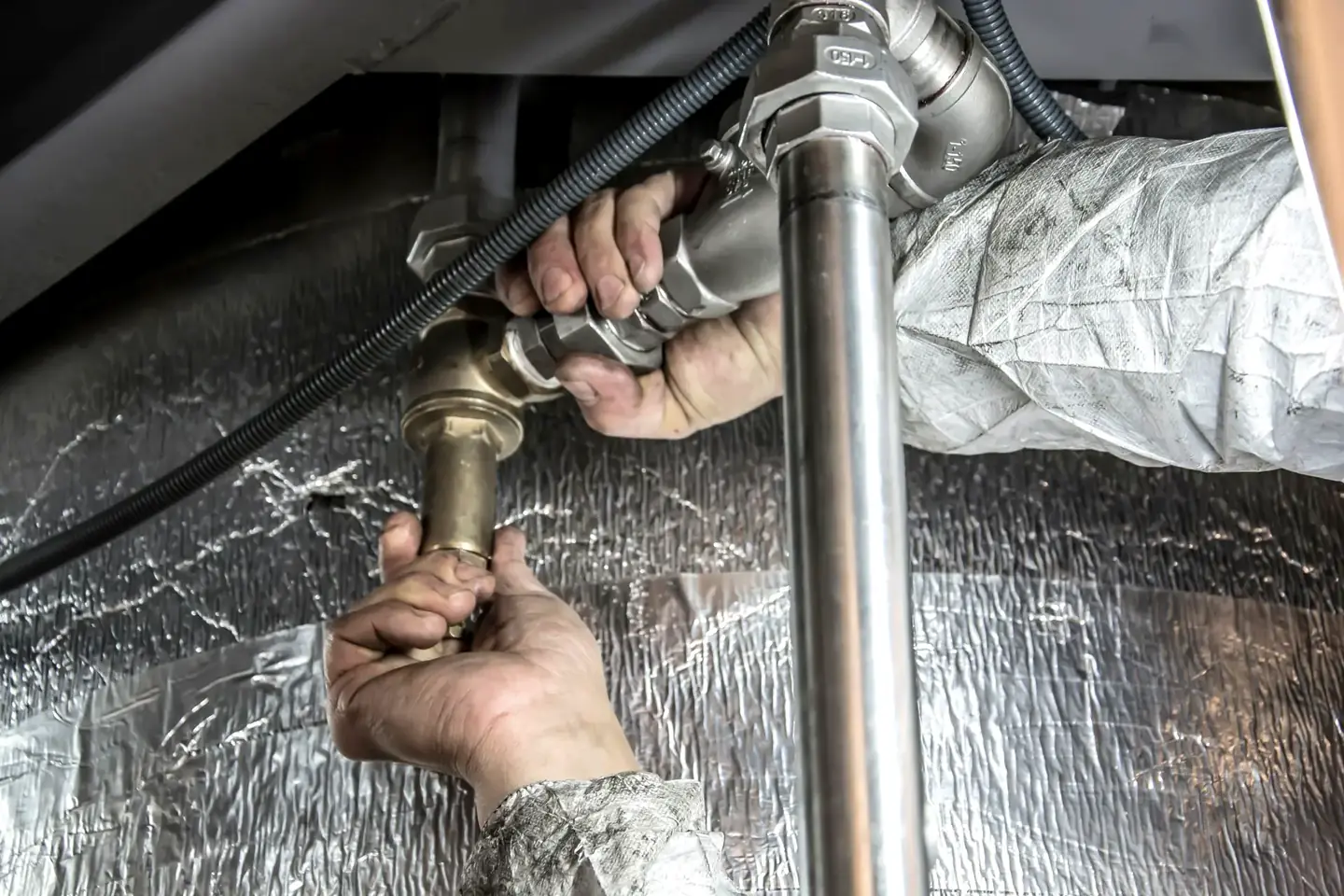
Leak Detection & Repair in Rockwall, TX
We find the leak before we open anything. No exploratory demolition, no guessing at a wall.
Emergency? We don't keep you waiting.
Burst pipes, gas leaks, no hot water — we answer 24/7, every day of the year.
Plumbing
Leak Detection & Repair
The expensive part of a water leak is almost never the pipe. It is the weeks it ran before anyone found it, and the flooring, drywall and framing it soaked on the way.
Our first job is locating it precisely. We isolate and pressure-test sections of the system, use acoustic listening equipment to trace the sound of escaping water through concrete and behind walls, and use thermal imaging where a hot-side leak is warming the surface above it. Only then does anything get opened.
That order matters. Plenty of the calls we get that look like a hidden supply leak turn out to be a running toilet, an irrigation valve, or a failed pressure regulator — cheaper problems, and we would rather find those than sell you a repair you did not need.
When you need leak detection
The symptoms homeowners actually describe when they call us — and what each one usually means.
A water bill that stepped up and stayed up
Bills move around with irrigation and houseguests. A bill that jumps and then holds at the new level for two cycles with no change in how you live is a leak until proven otherwise.
The meter moves with everything off
The single most useful test you can run yourself, and it costs nothing. Shut off every fixture and appliance, then watch the leak indicator on your meter. Movement means water is leaving the system somewhere.
A warm spot on the floor
A hot-side leak under the slab conducts heat straight up through concrete. A patch of tile noticeably warmer than everything around it, with no vent and no sun to explain it, is one of the more specific symptoms there is.
Running water you can hear in a quiet house
A faint hiss or continuous rushing sound at night with nothing running. Sound travels along the pipe, so it often seems to come from a wall well away from the actual break.
Damp, musty, or staining with no obvious source
Carpet that stays damp, a ceiling stain that grows, baseboards cupping, a smell that will not air out. By this stage the leak has been running a while.
Hot water that never quite recovers
A leak on the hot line means the heater is constantly reheating water that is leaving the system. People replace the water heater and the new one behaves identically, because the heater was never the problem.
What actually happens on the job
No mystery, no vague diagnosis. Here is the sequence we follow every time.
Confirm water is actually leaving the system
Meter test and system pressure test. This separates a real supply leak from a fixture problem, and it establishes how fast the loss is running.
Isolate hot side from cold side
Testing each side independently tells us which line failed and frequently rules out a slab leak entirely. This is the step that saves people from unnecessary concrete work.
Pinpoint with acoustic and thermal equipment
Acoustic listening traces the sound of escaping water through slab and wall. Thermal imaging maps hot-side leaks from the surface. Between them we can usually mark a small area rather than a general region.
Open the smallest access that works
When we do cut, we cut once and we cut small. Anyone proposing to open the slab or a wall to go looking for a leak has skipped the part you are actually paying for.
Clay soil, hard water, and the occasional hard freeze
North Texas gives supply lines a hard time from three directions. Our clay soil swells when wet and shrinks hard through a dry summer, and that seasonal movement flexes slabs and the pipes cast into them. Our water is mineral-heavy, which over the years drives pinhole corrosion in copper from the inside. And every few winters a genuine hard freeze finds whichever joint was already weakest. The result is that hidden leaks are simply more common here than in a lot of the country, and homeowners who dismiss a small unexplained bill increase tend to regret it.
Straight talk on pricing
Detection and repair are separate stages, and they should be priced that way. Detection is a fixed scope — we find it and we tell you exactly what is wrong. The repair depends entirely on what we find: an accessible joint in a wall is a different job from a hot line under a kitchen island. Any number quoted before the leak is located is a guess. It is also worth knowing that many homeowner policies cover the cost of accessing the leak even when they exclude the pipe itself, so document everything before work starts.
(469) 338-5533Leak Detection questions we get asked
How can I tell if I have a leak before calling anyone?
Run the meter test. Shut off every fixture, appliance, ice maker and irrigation zone. Find the leak indicator on your water meter — usually a small triangle or dial that turns with even minimal flow — and watch it. If it moves, note the exact reading, leave the house untouched for two hours, and read it again. Any change confirms a continuous leak. Then shut the main valve at the house and repeat: if the meter still moves, the leak is between the meter and the house.
Do you have to break up the floor to find a slab leak?
No, and you should push back on anyone who says otherwise. Location happens with acoustic equipment, thermal imaging and pressure isolation — all non-destructive. Concrete only comes up after we know precisely where the leak is, and then only the smallest access that lets us make the repair. In some cases a reroute avoids opening the slab at all.
Will my insurance cover this?
It depends on your policy, but a common pattern is that the insurer covers accessing and repairing the damage — the concrete, flooring and drywall — while excluding the failed pipe itself and anything they classify as gradual damage. Call your carrier before work starts, photograph everything, and ask us for an invoice detailed enough to distinguish access from repair.
How urgent is a small leak?
More urgent than it feels. A leak does not stabilize — it erodes soil, saturates clay, and feeds mold in wall cavities the entire time it runs. The repair cost is usually flat. The damage cost is the part that compounds while you wait.
What Rockwall neighbors say
"Fastest to respond and complete the job — a must when you wake up to no hot water on a cold morning. They cleaned my tankless water heater and had everything running perfectly."
"A great partner for both plumbing and HVAC. High-integrity company — responsive with questions, they show up on time, and their prices are reasonable. Exactly what you want."
"Fantastic. Great job for a fair price, responsive and professional the whole way through. Highly recommend Wilson Family for any plumbing work."
"Fair estimate and they went beyond to sort out the city requirements for us. Kari was incredibly responsive and Tyrone was professional and right on schedule."
Leak Detection across Rockwall County & the Dallas metro
Same licensed team, same 24/7 phone, every one of these communities.
Related services
Worth reading first
Everything we do
Book Wilson Family — one call fixes plumbing, heating & air.
Upfront pricing, licensed technicians, and a family that treats your home like its own. We answer 24/7.